- Departments
- Specialities
- Aesthetics
- Cardiology
- Dementia
- Dermatology
- Dietitian Services
- Endocrinology
- Family Medicine
- Gastroenterology
- General Surgery
- Geriatrics
- Haematology
- Infectious Diseases
- Internal Medicine
- Maxillofacial Surgery
- Nephrology
- Neurology
- Obstetrics and Gynaecology
- Oncology
- Ophthalmology
- Orthopaedics
- ENT
- Paediatrics
- Plastic Surgery
- Physiotherapy
- Pulmonology
- Radiology
- Rheumatology
- Urology
- Consultants
- Fees
- About Us
- Call: 020 8358 7100
Search
Chase Lodge Hospital Complaints Policy
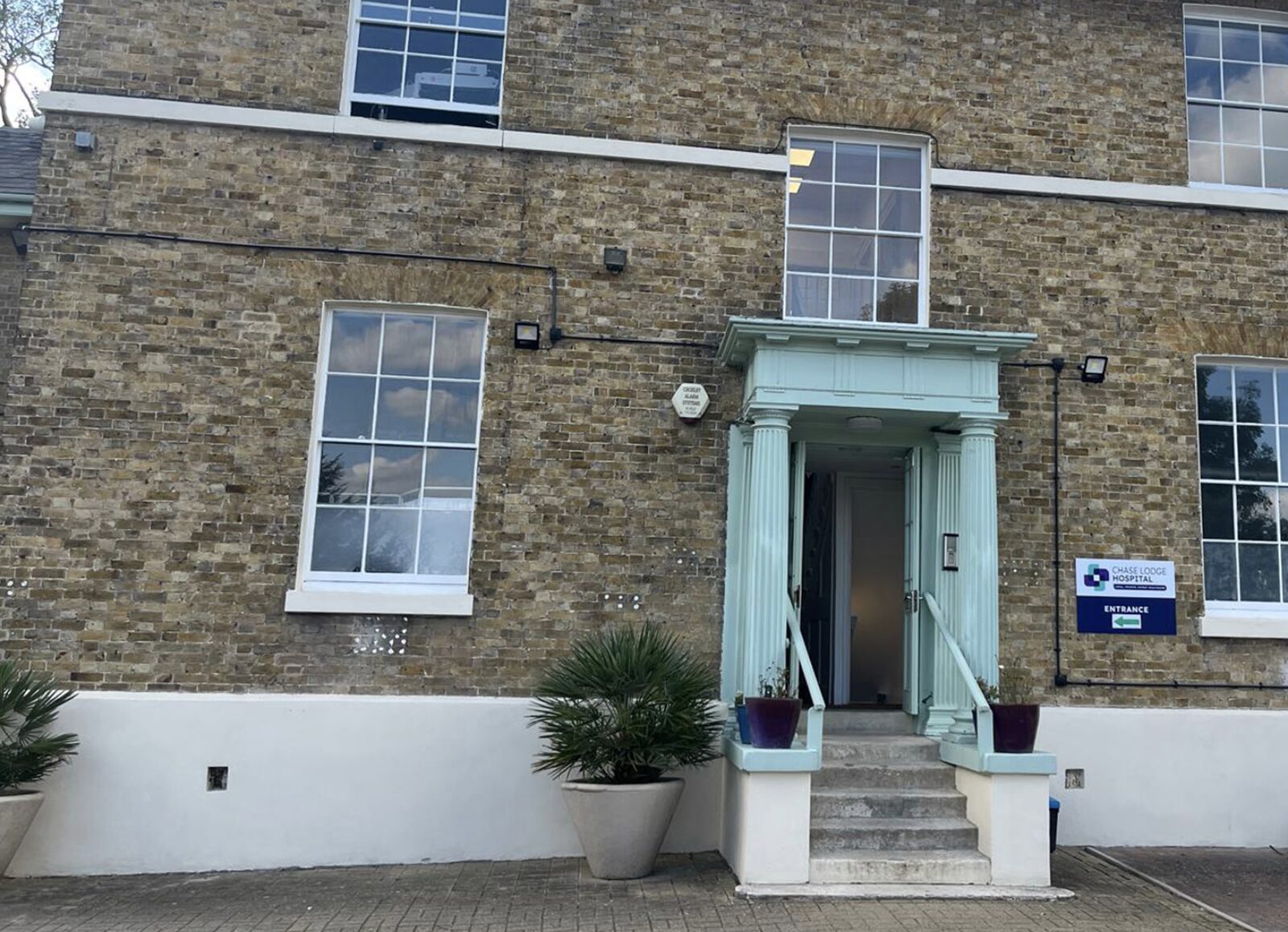
Complaints Policy and Procedure
| Policy Reference Number | PEO03 |
| Version | v2.0 |
| Document Status | Approved |
| Author(s) | Pardip Grewal (Non execute Director) |
| Approving Committee | Dr Grant Pakter (Clinical Director)
Dr Ibrahim Yahli (Registered Manager & CEO) |
| Date approved by Committee | October 2025 |
| Operational date | October 2025 |
| Review Date | October 2026 |
| Review Frequency | 1 year |
Regulatory Registration
| CQC Registered Provider | Chase Lodge Health Limited |
| CQC Provider ID / Location ID | Provider ID: 1-101634260
Location ID: 1-105440969 |
GMC Governance
| GMC Designated Body | Chase Lodge Hospital / Chase Lodge Health Limited |
| Responsible Officer / Registered Manager | Dr Ibrahim Halil Yahli |
1. Policy Statement and Purpose
Chase Lodge Hospital (CLH) is committed to delivering safe, effective, and compassionate care to all patients and service users. We recognise that complaints are an important source of feedback that help us identify areas for improvement, ensure accountability, and maintain trust in our services.
This policy outlines the hospital’s approach to managing complaints in accordance with the Principles of Good Complaint Handling (Parliamentary and Health Service Ombudsman) and CQC Regulations. It sets out how patients, carers, or their representatives can raise concerns or complaints, and how these will be handled fairly, promptly, and transparently.
The purpose of this policy is to:
- Provide a clear, accessible process for raising and resolving complaints.
- Promote a culture of openness and learning in line with Duty of Candour.
- Ensure that complaints are managed in compliance with legal and regulatory obligations.
- Strengthen patient confidence and drive continuous service improvement.
2. Scope
This policy applies to all staff (permanent, temporary, locum, contractors, and consultants with practising privileges) working within CLH.
It covers complaints and concerns related to all clinical and non-clinical services provided at Chase Lodge Hospital.
It also applies to services delivered by third parties on behalf of the hospital.
3. Objectives
- To ensure complaints are handled in a timely, fair and transparent
- To resolve concerns as close to the point of service delivery as possible.
- To ensure patients and carers are treated with dignity, respect and sensitivity.
- To comply with all relevant legislation and regulations, including Duty of Candour.
- To learn from complaints, embed improvements, and reduce recurrence.
- To maintain comprehensive records and ensure effective governance reporting.
4. Policy Principles
CLH is guided by the following principles in handling complaints:
- Getting it right – Acknowledge complaints promptly, investigate thoroughly, and provide fair remedies.
- Being customer focused – Apologise where appropriate, communicate clearly, and manage expectations.
- Being open and accountable – Keep accurate records, be transparent about decisions, and ensure proper oversight.
- Acting fairly and proportionately – Treat all complainants equitably, respecting diversity and inclusion.
- Putting things right – Provide appropriate remedies including apologies, explanations, remedial action, or compensation where applicable.
- Seeking continuous improvement – Use complaints to drive learning, service improvement, and staff development.
5. Procedure
5.1 Definition of a Complaint
A complaint is any expression of dissatisfaction (verbal or written) made by a patient, carer, or authorised representative requiring a formal response. If a patient is anxious about making a complaint themselves, they can ask a relative or friend to do so on their behalf. In the event of receiving a complaint made on behalf of a patient, CLH will seek the patient’s permission in writing. By doing this the patient waives their right to confidentiality of their own clinical information, by sharing this with the person acting on their behalf.
Where someone does not have capacity to consent, CLH can only accept consent from an authorised person with Legal Power of Attorney (specifically a Court of Protection appointed Deputy authorised to make health and welfare decisions).
Consent is still needed in situations where the person is very young, too ill or if the person has died, when the Access to Health Records Act 1990 applies. There are limited access rights for the personal representative of a deceased relative under the Access to Health Records Act 1990.
5.2 Making a Complaint
Chase Lodge Hospital is committed to collect, investigate and analyse patient feedback including complaints as parts of its quality improvements plans. Patients can provide us with feedback both positive and negative via the following methods:
- Verbal feedback to any member of staff
- Email to Clinical Director.
- Written letter to the Hospital
- Feedback forms (on site)
- Digital channels including QR codes or review platforms
- Google Reviews
Where a complaint is made on behalf of a patient, written consent will be sought in compliance with General Data Protection Regulation (GDPR).
5.3 Stages of the Complaints Process
Stage 1 – Local Resolution
Stage 1 aims to resolve complaints promptly and effectively at the point of service delivery, wherever possible. All complaints—verbal or written—are recorded in the Complaints Log (C001), and all staff are expected to make every reasonable effort to resolve concerns in a timely and sensitive manner.
a. Verbal Complaints
- Verbal complaints may be raised in person, by phone, or through any member of staff.
- The staff member receiving the complaint must:
- Listen actively and respond with empathy and professionalism.
- Attempt to resolve the issue immediately where appropriate.
- If resolved at the point of contact, document the details clearly in the CIS (Complaints / Incident / Significant Event) Form (C002) before the end of their shift.
- Escalate the matter to their Line Manager or Senior Manager if the complaint cannot be resolved immediately or requires further review.
- All verbal complaints are forwarded to the Executive PA or designated administrator for entry into the Complaints Log.
- A Senior Manager will review whether the issue should be managed as a complaint, incident, or significant event, and ensure the appropriate process is followed.
b. Written Complaints
- Written complaints may be submitted via email, post, or online forms.
- All written complaints are acknowledged in writing within 2 working days of receipt.
- The Hospital Manager (or delegate) will:
- Offer to contact or meet with the complainant to clarify the concerns raised and expected outcomes.
- Confirm the preferred method of communication (e.g. email, letter, telephone).
- Seek consent to access clinical records if required for the investigation.
- Identify any additional needs (e.g. interpreter, advocacy support).
- Inform the complainant of expected investigation and response timelines.
- An investigation will be carried out by the appropriate clinician or manager, and a draft response will be reviewed and approved by the Registered Manager.
- A full written response will be sent within 20 working days. If this is not possible, the complainant will be informed of the reason for delay and given a revised timeframe.
- All written complaints and outcomes are logged and reviewed as part of governance and quality improvement processes.
Stage 2 – Escalation to Senior Management
- If the complainant is dissatisfied with the response, they may escalate the complaint in writing to the CEO or Director.
- A senior-level review is conducted, and a written response is provided within 20 working days.
Stage 3 – External Review or Regulatory Escalation
If the complainant remains dissatisfied after Stage 2, they have the right to raise their concerns with an external body for further consideration.
While (CLH) aims to resolve all complaints internally, patients and service users may contact the relevant regulator or professional body if they are not satisfied with the outcome of their complaint.
- The escalation to any external or regulatory body should occur after the internal process (Stage 1 and Stage 2) has been fully completed.
- CLH will cooperate fully with any external review or regulatory investigation and will use the findings to improve its services.
The following options are available:
a. Care Quality Commission (CQC)
The CQC is the independent regulator for health and social care services in England.
Although the CQC does not investigate individual complaints on behalf of patients, it monitors how providers like CLH handle complaints and uses the information to support its inspection and regulatory functions.
Contact details:
Care Quality Commission
Citygate, Gallowgate, Newcastle upon Tyne, NE1 4PA
Telephone: 03000 616161
Email: enquiries@cqc.org.uk
Website: www.cqc.org.uk/contact-us
b. Professional Regulatory Bodies
If the complaint relates to the professional conduct or fitness to practise of a clinician or healthcare professional, the complainant may contact the relevant regulatory body directly:
- General Medical Council (GMC) – for doctors
Website: www.gmc-uk.org
- Nursing and Midwifery Council (NMC) – for nurses or midwives
Website: www.nmc.org.uk
- Health and Care Professions Council (HCPC) – for allied health professionals
Website: www.hcpc-uk.org
c. Other Options
- Information Commissioner’s Office (ICO) – for complaints related to data protection or privacy breaches
Website: www.ico.org.uk
- Independent Health Complaints Advocacy (IHCA) – for free, independent support in making or pursuing a complaint
Website: www.nhscomplaintsadvocacy.org
5.4 Anonymous Complaints
Anonymous complaints will be investigated to the extent possible and logged for governance purposes.
5.5 Complaints and Litigation
Where the complainant has stated that it is their intention to seek legal advice, CLH should continue to follow the complaints procedure (whether at stage one or two). Wherever feasible CLH will attempt to resolve the complaint and not abandon the use of the complaints procedure due to a potential legal claim.
Where a legal claim has been made, then those areas of the complaint that are central to the legal claim (i.e. clinical negligence and issues of causality) will not be considered under the complaints procedure but other areas may.
5.6 Access to Health Records
Patients have a right to see their health records under the Data Protection Act 1998. However, access to health records can be refused if disclosure is likely to cause mental or physical harm to the patient or someone else.
A fee of £50 will be charged for granting access to health records. This is the maximum fee in England, Scotland, Wales and Northern Ireland as set out in the Data Protection Act.
6. Special Provisions
- Patients lacking capacity: Only complaints from individuals with legal authority (e.g. LPA or Court of Protection) will be accepted.
- Deceased patients: Complaints will be managed under the Access to Health Records Act 1990.
7. Monitoring and Review
- All complaints will be recorded in the Complaints Log and reviewed at monthly Clinical Governance Meetings.
- Trends and themes will be reported quarterly to the Board and shared with the Integrated Care Board where required.
- An annual complaints review will be conducted, incorporating lessons learned and quality improvement actions.
- Regular staff training will be provided on complaints handling.
- This policy will be reviewed annually or earlier if required by changes in legislation or regulation.
8. Legal and Regulatory Framework
This policy complies with:
- Care Quality Commission Regulations (Fundamental Standards of Care)
- Parliamentary and Health Service Ombudsman Principles of Good Complaint Handling
- General Data Protection Regulation (GDPR) and Data Protection Act 2018
- Duty of Candour
- Access to Health Records Act 1990
- Public Interest Disclosure Act 1998
- NHS Constitution for England
9. Appendices
- C001- Complaints Log Template
- C002- Complaint Form